Excess inventory is worth what a willing buyer pays a willing seller in the open — and on BidChips that number typically lands between a reserve of 5–15% of the lowest distribution price and a Buy-It-Now around 60% of it. The lowest price a distributor lists for stock that has not sold is not the market. The bid that clears is.
What does “market price” actually mean?
The definition is older than the components market. IRS Revenue Ruling 59-60 defines fair market value as “the price at which property would change hands between a willing buyer and a willing seller, neither being under any compulsion to buy or sell and both having reasonable knowledge of the relevant facts.” BidChips uses that definition on its sell page because it settles the argument most sellers have with themselves.
By that standard, a listed price is a claim, not a price. A distributor’s lowest asking price for a part that has sat unsold for months has not changed hands, so it has proved nothing. Neither has the number you paid for the stock two years ago, and neither has the single private offer a broker made behind closed doors. The only price that meets the definition is the one a ready, willing buyer pays — and the only way to find it is to let more than one of them compete for the same lot at the same time.
Where does surplus value leak?
Three places, and they compound.
Off the franchised chain. Once a part leaves the manufacturer’s authorized distribution it carries no franchised traceability. Buyers price that uncertainty in, hard, unless someone independent restores it — which is why authentication sits inside the selling process rather than beside it.
Aging date codes. Every quarter a reel sits on your shelf, its date code moves further from what a buyer’s quality team will accept without questions. You cannot reverse this one, which is the argument for selling sooner rather than later.
Stacked broker margins. BidChips puts a traditional broker chain at 25–75% of margin between the seller’s price and the buyer’s. That margin comes out of your recovery on one end and the buyer’s cost on the other, and it is the one leak an open auction closes: the buyer pays one increment over the next bidder, and you settle on the closing price.
What is the Recovery Range?
The Recovery Range™ is the band BidChips expects a lot to clear in, measured against the lowest distribution price (LDP) for the part. Three points define it:
| Point | Where it sits | What it is |
|---|---|---|
| Reserve | Typically 5–15% of LDP | Your floor. The lot never sells below it. |
| Buy-It-Now (BIN™) | Around 60% of LDP | Where lots usually clear; a buyer can take it and end the auction |
| Shortage-market ceiling | Approaching 100% of LDP | Rare: high demand meeting scarce supply |
The reserve is deliberately low. It is a floor, not a target, and a high floor suppresses the bidding that lifts a lot toward the BIN. Everything BidChips does between submission and close — creating demand before the lot goes live, authenticating the parts, running the auction in the open — is built to push the clearing price toward the top of the range. You can set your own reserve or take BidChips-advised pricing calibrated from live market data; the FAQ covers both.
Competing excess from other sellers clears lower and can overlap the bottom of this range. Over time the site’s range runs higher, and the reason is mostly the next section.
Why does packaging move the number more than anything else?
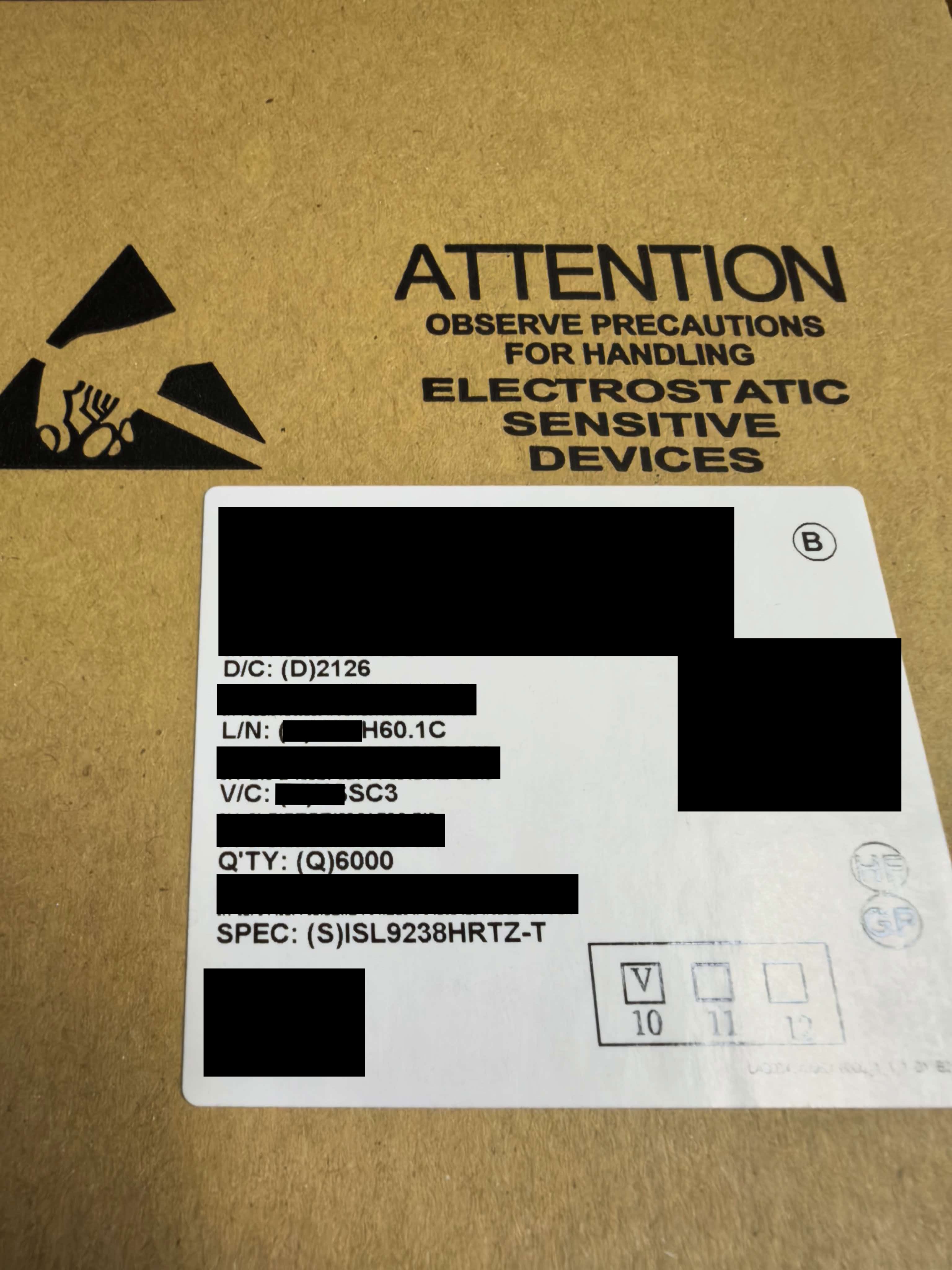
Because a buyer is paying for provenance as much as for silicon. Same part, same date code, same quantity — the one in a sealed factory carton with the QA seal intact recovers the most, and the one in a generic bag with an invoice recovers the least. BidChips describes four tiers:
| Tier | What it looks like | Recovery |
|---|---|---|
| 1 — Sealed factory box | Original carton, factory bulk-ID and date-code labels, QA seal unbroken | Top |
| 2 — Factory MBB or reel | Original moisture-barrier bag or reel; seal date, MSL and MPN labels present | Strong |
| 3 — Original packaging, opened | Genuine packaging with the seal broken or repacked; still traceable | Fair |
| 4 — Loose parts | Generic bag plus an invoice; no factory packaging or labels | Lowest |
A receipt is not provenance. It proves you bought something; it does not prove what is in the bag. That is why the FAQ calls packaging the single biggest lever you control: you cannot change a date code, but you can send the best packaging you have and photograph the labels before the lot ships.
How is my settlement calculated?
One line, and it is on your dashboard while the auction runs:
Highest qualified bid at close (per piece) × quantity × your revenue split.
- Every price on BidChips — current bid, BIN™, reserve, and history — is shown per piece, so the bid you watch is the number in the formula. Quantity is shown separately as context.
- The split is 60% to the seller by default, occasionally negotiated higher. No other platform fee is stated.
- You are paid at settlement, once the auction closes and the sale completes, with the certified third-party report on file.
A hypothetical lot makes the arithmetic plain: 10,000 pieces close at $1.20 per piece. Gross is $12,000; at the default 60% split the seller settles $7,200. The dashboard shows that figure moving as bids climb — your net share if every live lot closed right now.
And nothing closes without you. From the dashboard you can accept a bid, adjust a price, or pull a lot for internal use, line by line or several at once. The auction sets the open-market price; you decide whether to collect on it.
What does BidChips say it has recovered?
BidChips reports $135M+ in recovery generated for sellers, 180+ countries reached, and 5,000+ competitive auctions completed. The sold lots it shows include verified inventory from Xilinx/AMD, u-blox and Micron. Each went through the same four steps before the auction — a market value range, demand creation, reserve and BIN alignment, and certified authentication by White Horse Laboratories.
Frequently asked questions
Is the reserve the price I should expect?
No. The reserve is the floor the lot cannot sell below, typically 5–15% of the lowest distribution price. Lots usually clear nearer the Buy-It-Now, around 60% of LDP, and a scarce part can carry higher.
Do I have to sell at the closing bid?
No. Nothing closes without you. From your dashboard you can accept the bid, adjust your price, or pull the lot for internal use, one line at a time or in bulk.
What if my parts have no traceability?
Lots without direct traceability are authenticated by White Horse Laboratories, a certified third-party lab, before shipment. A lot that fails does not ship, and the report is tied to the lot for both buyer and seller.
When do I get paid?
At settlement, once the auction closes and the sale completes. The dashboard tracks the live recovery figure during the auction and the documented payout at close.
Before you request an estimate
Note the packaging tier for each line, photograph the labels, and record the date codes. Then upload the list — a full spreadsheet or a single line — and BidChips returns an intrinsic value range and a recovery estimate per part, with no obligation, from the sell page. For the mechanics of the auction your buyers will bid in, read how bidding works on BidChips; for the flow from submission to payout, how to sell excess inventory on BidChips.